Studio Journal As Altar
Practice: Collage as a Way of Working
Collage is how I work through things.
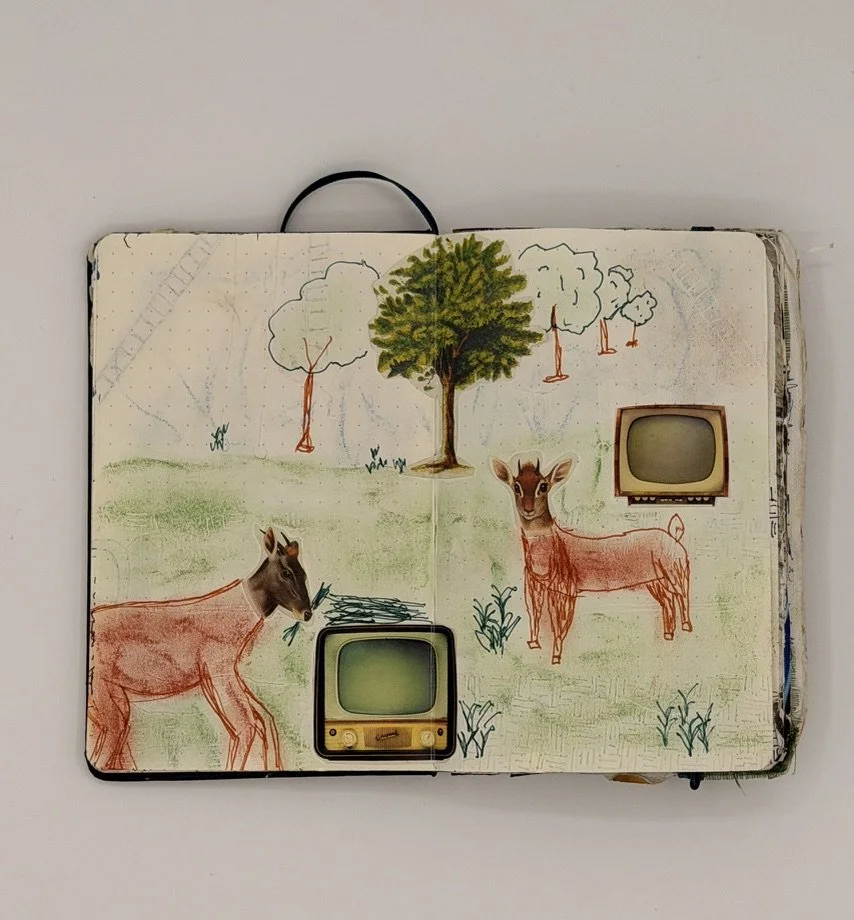
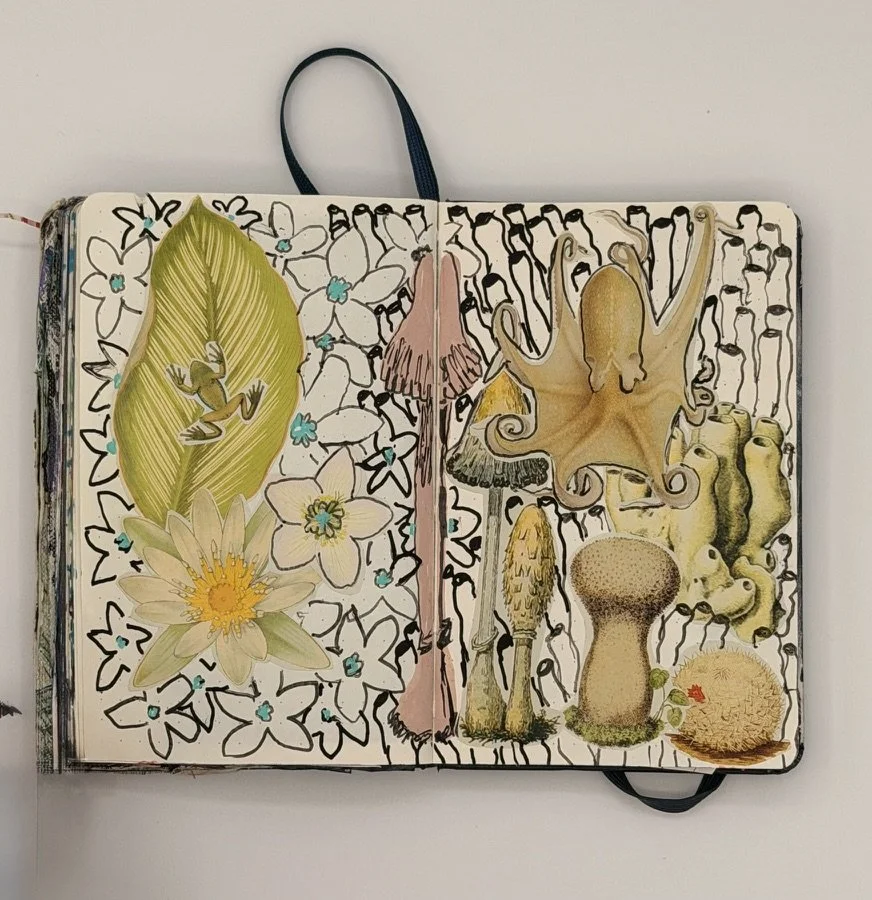
I gather what is within reach—images, scraps, text, marks—and begin placing them in relation. The process is not about arriving at a single idea, but about staying with what emerges as I build.
The work develops through repetition.
Looking, adjusting, covering, revealing, returning.
Over time, the page becomes a record of attention.
Not just what I made, but what I stayed with long enough to understand differently.
Access: The Journal as a Site
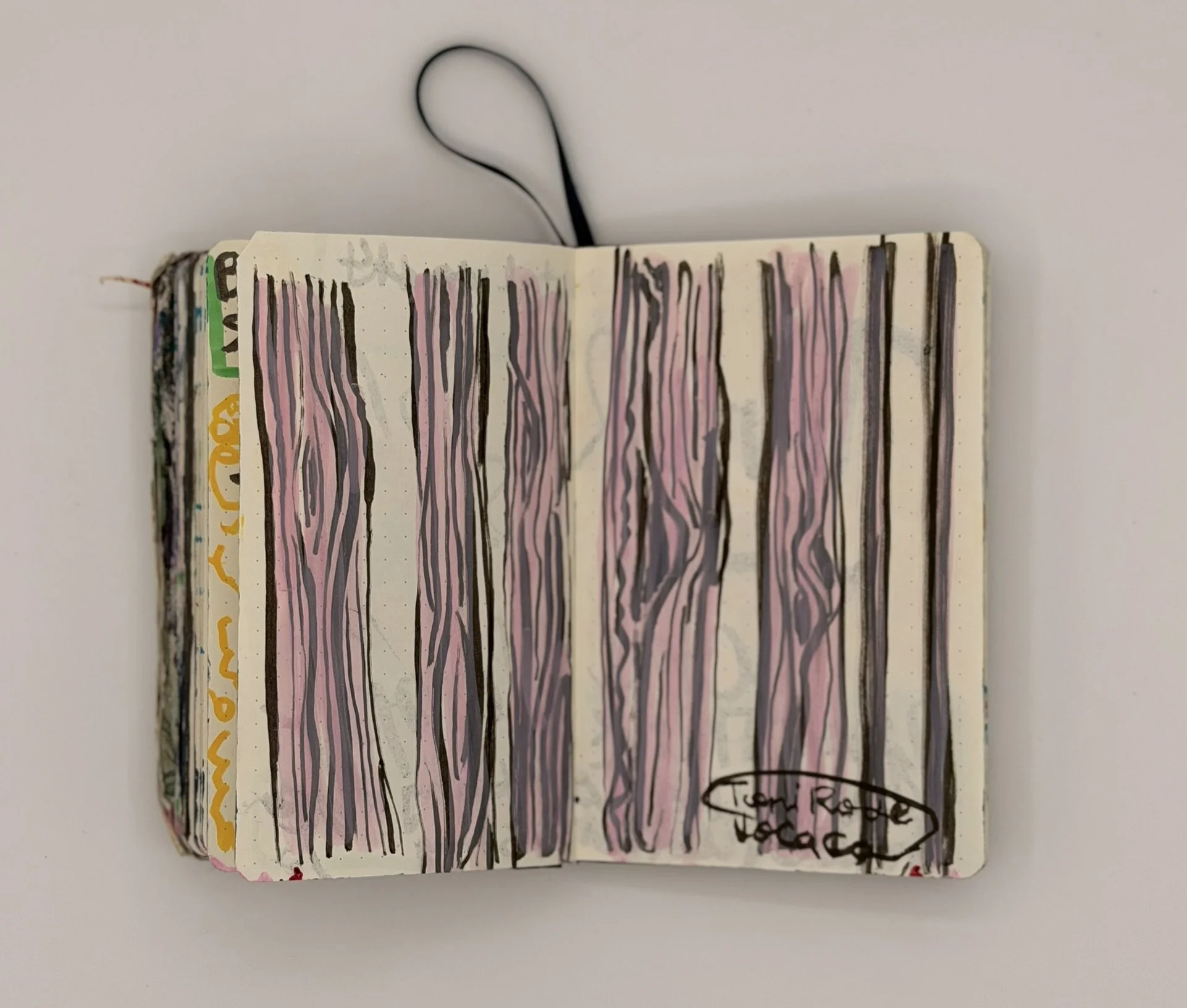
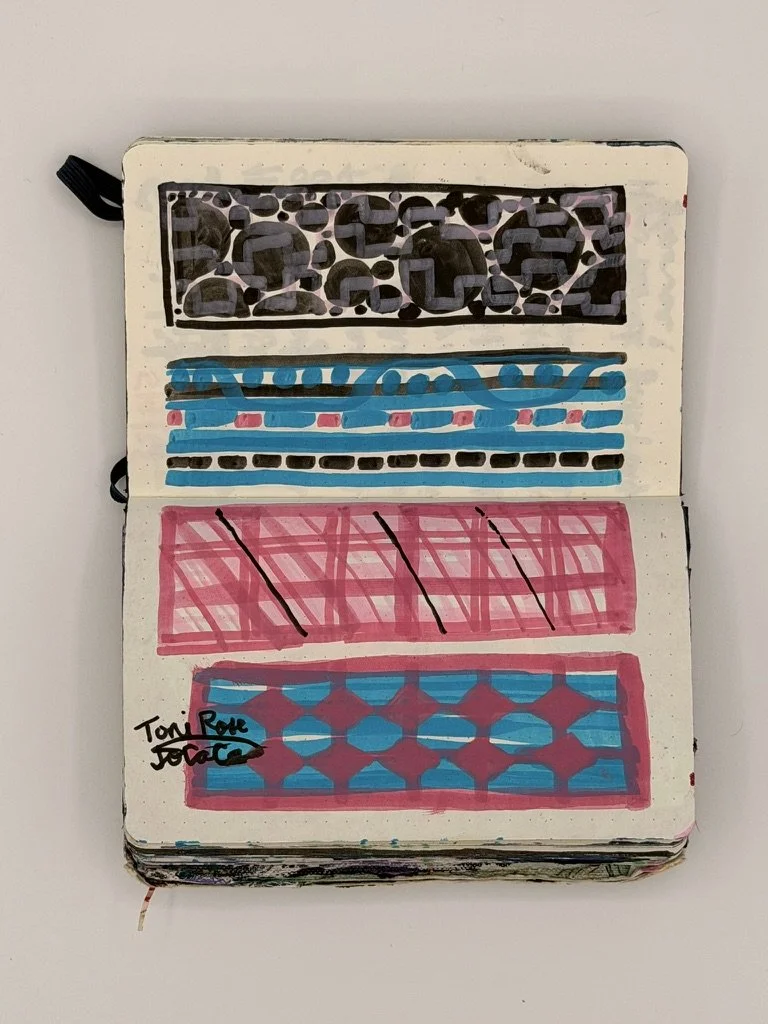
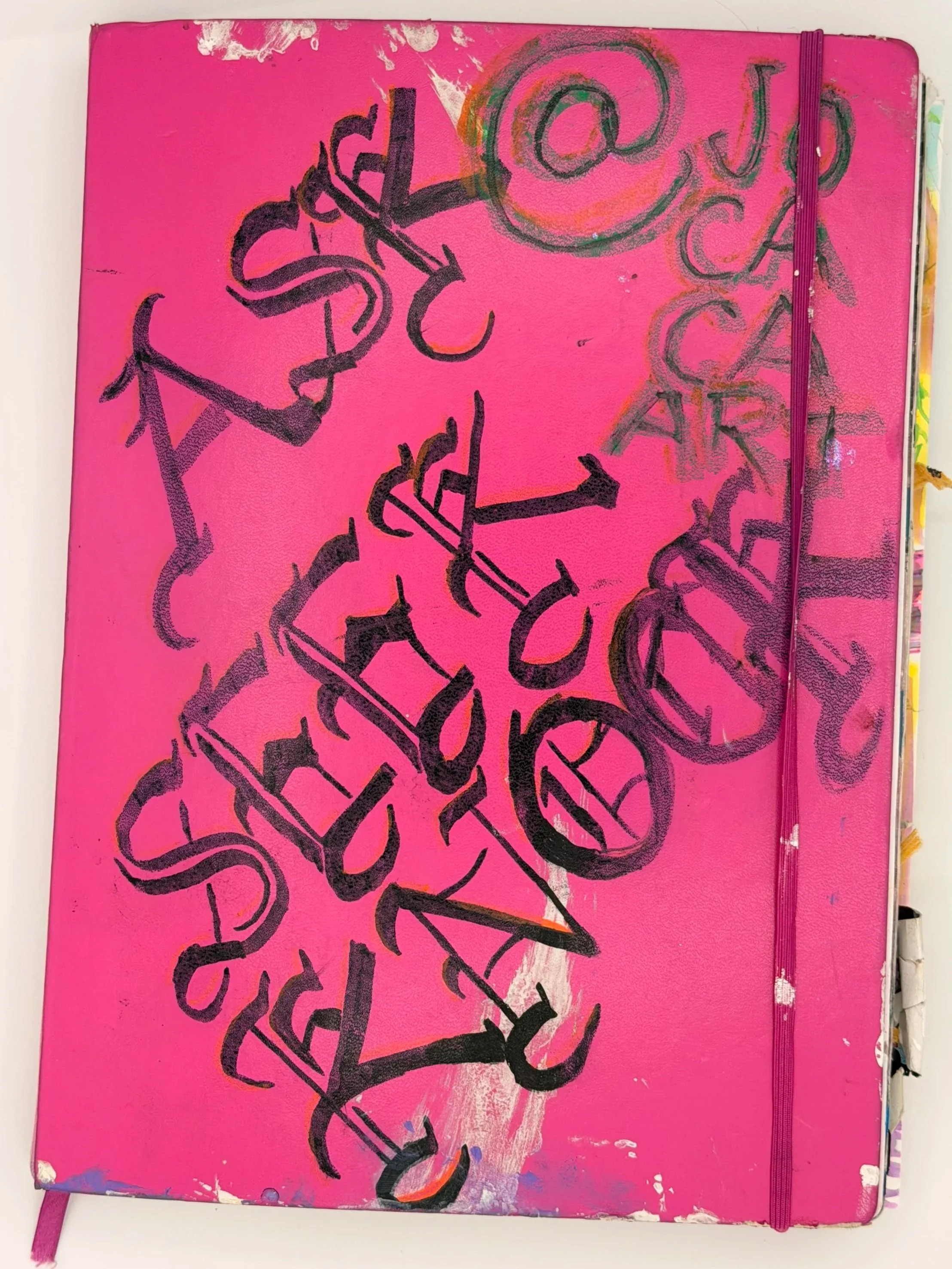
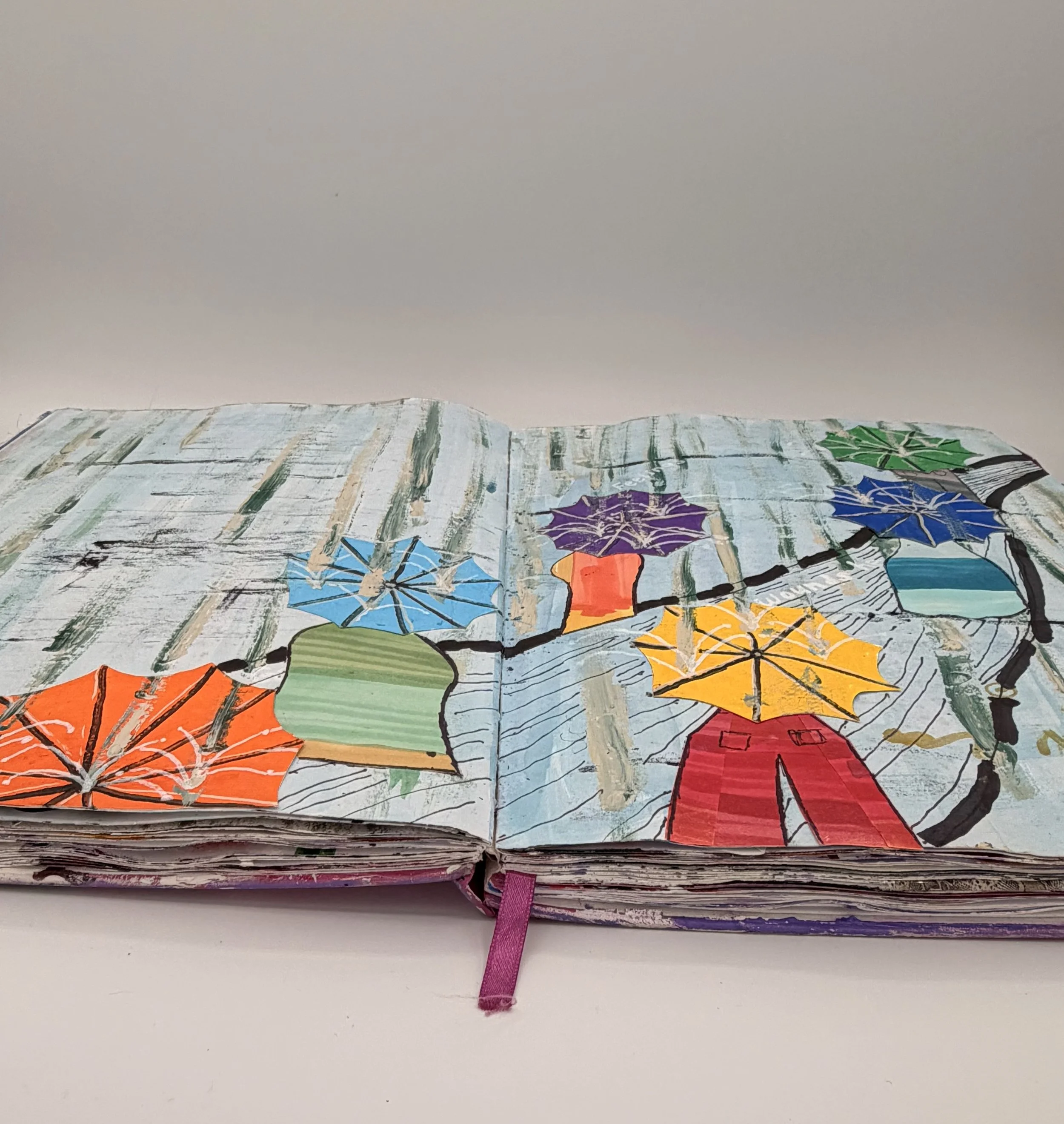
This work happens in journals.
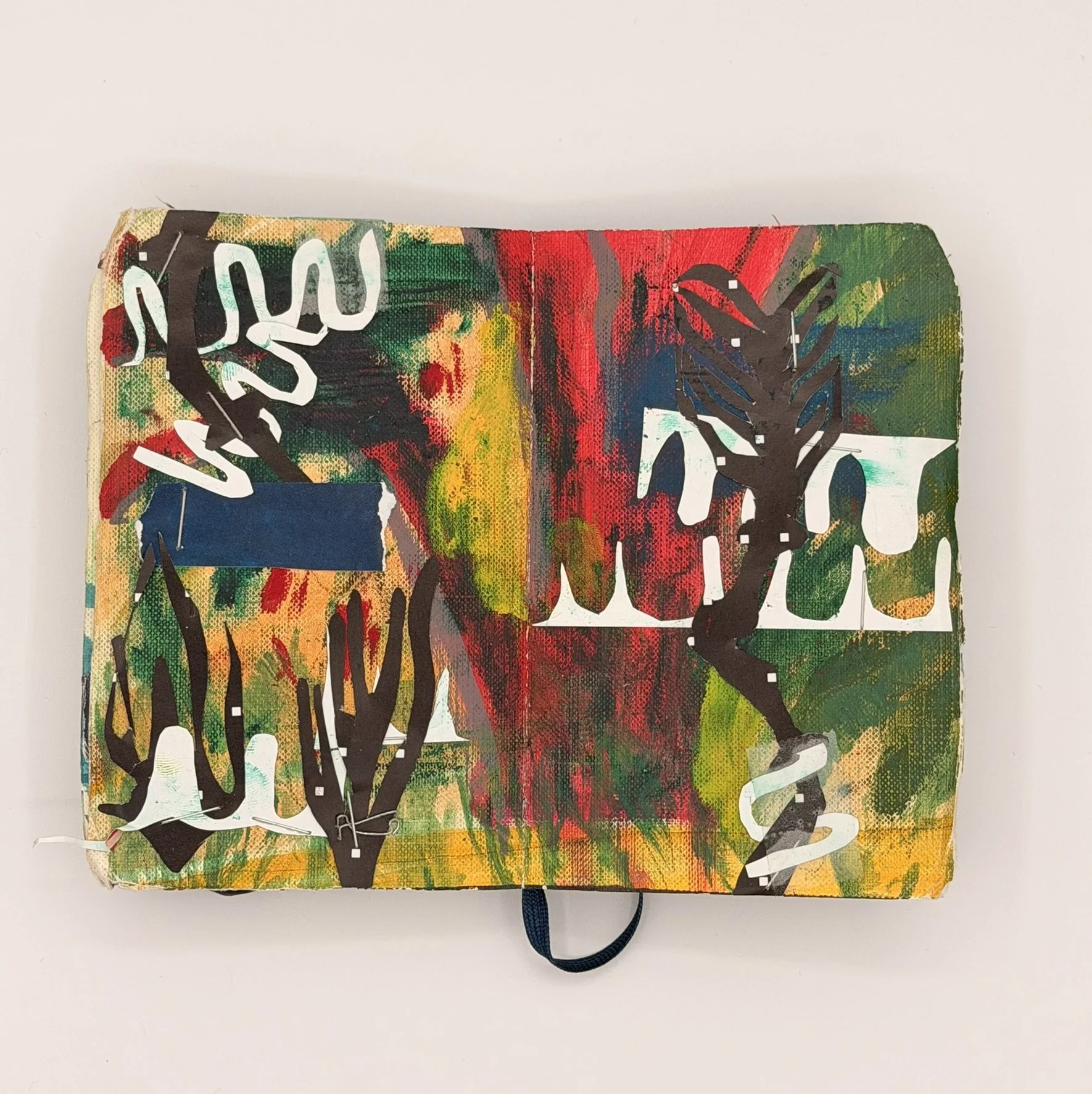
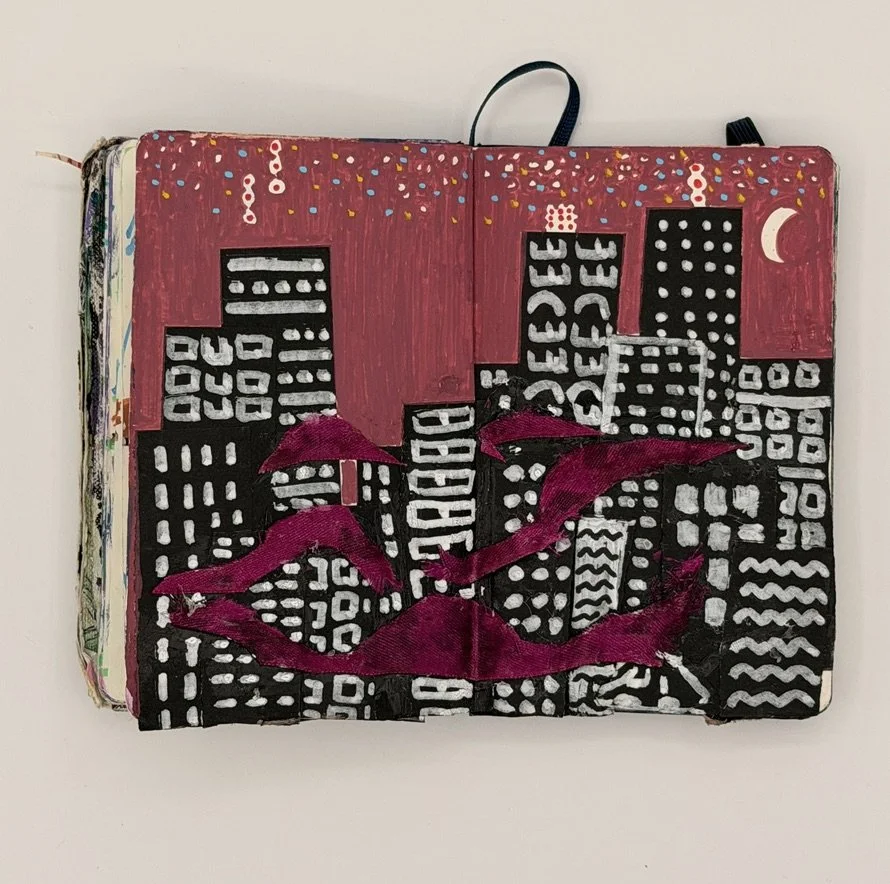
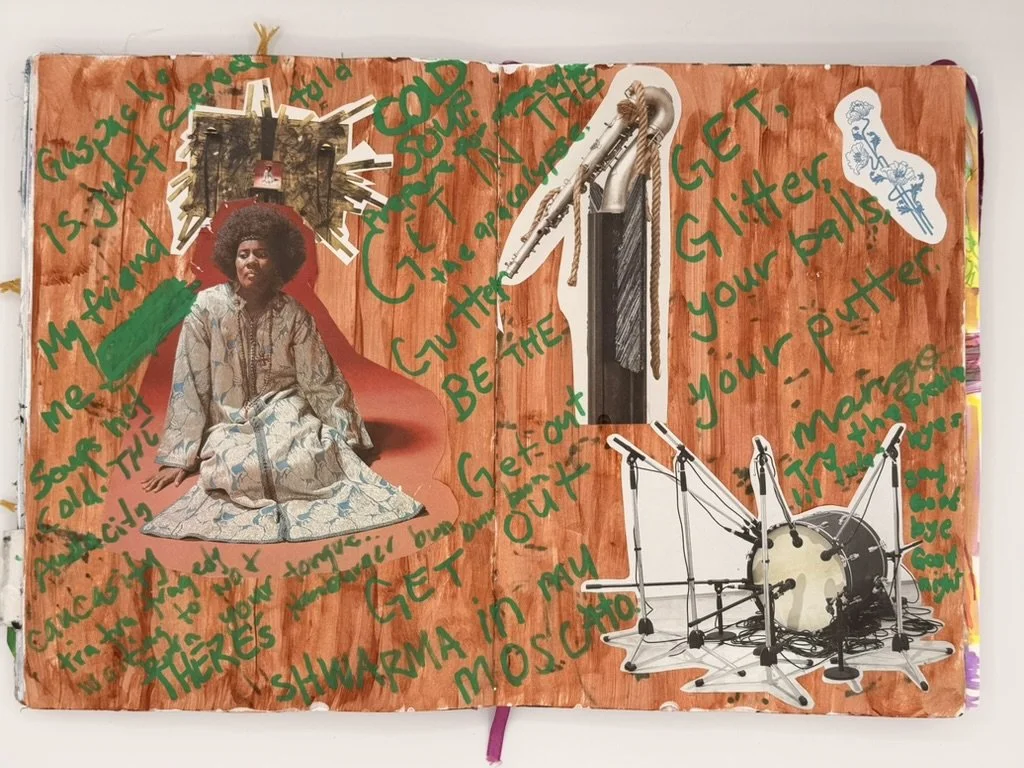
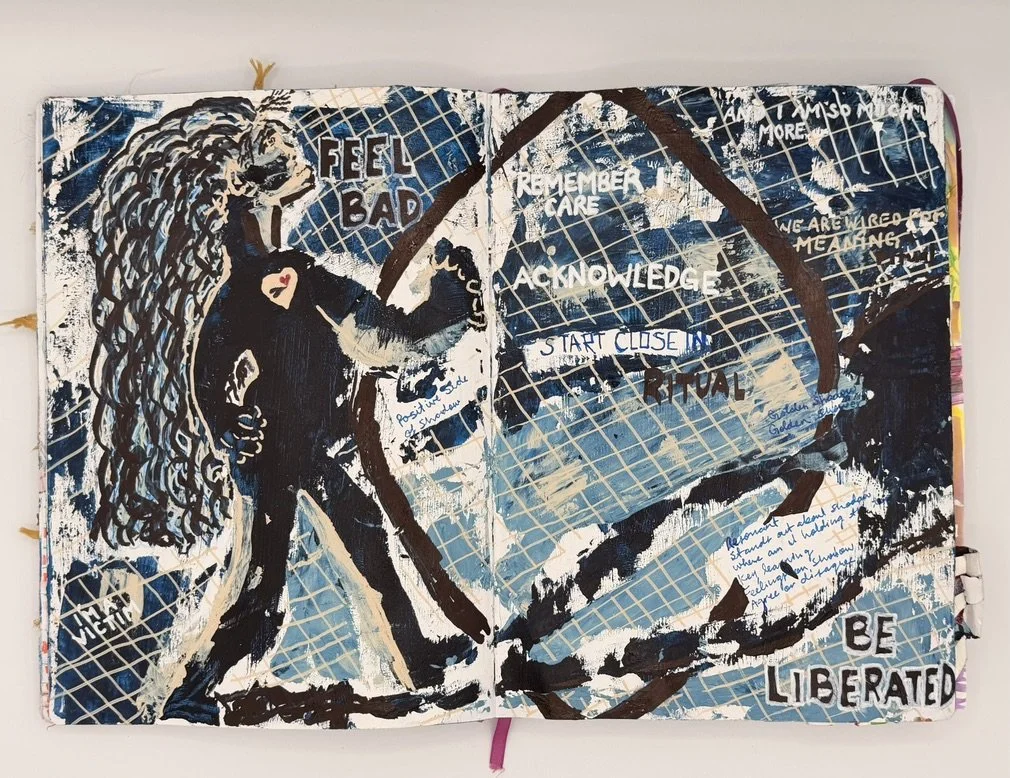
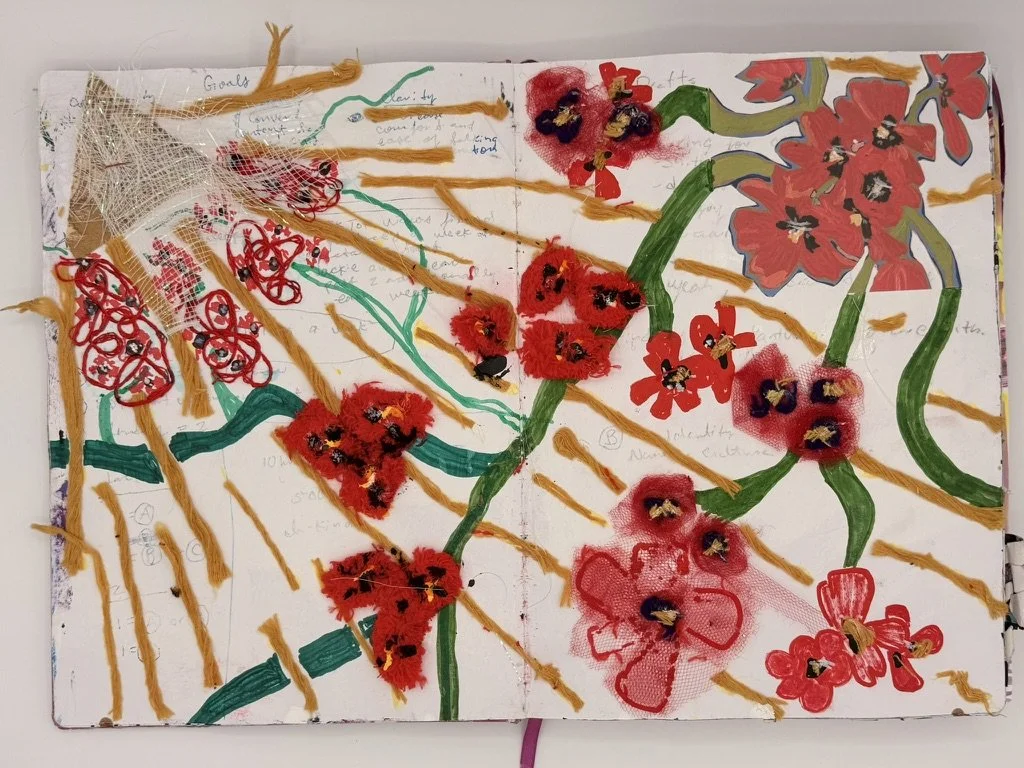
They are small, portable, and immediate. They remove the need for perfect conditions. I can begin without preparation and return without interruption. I can tear apart with my fingers and affix in dozens of combinations to see what the moment is revealing.
Because of that, the work stays close to daily life.
It does not wait for the right moment or the right space.
The journal holds the process as it is happening.
Unfinished, ongoing, and available to be reentered at any time.
Method: Pulling Apart, Bringing Together
The process begins by breaking things open.
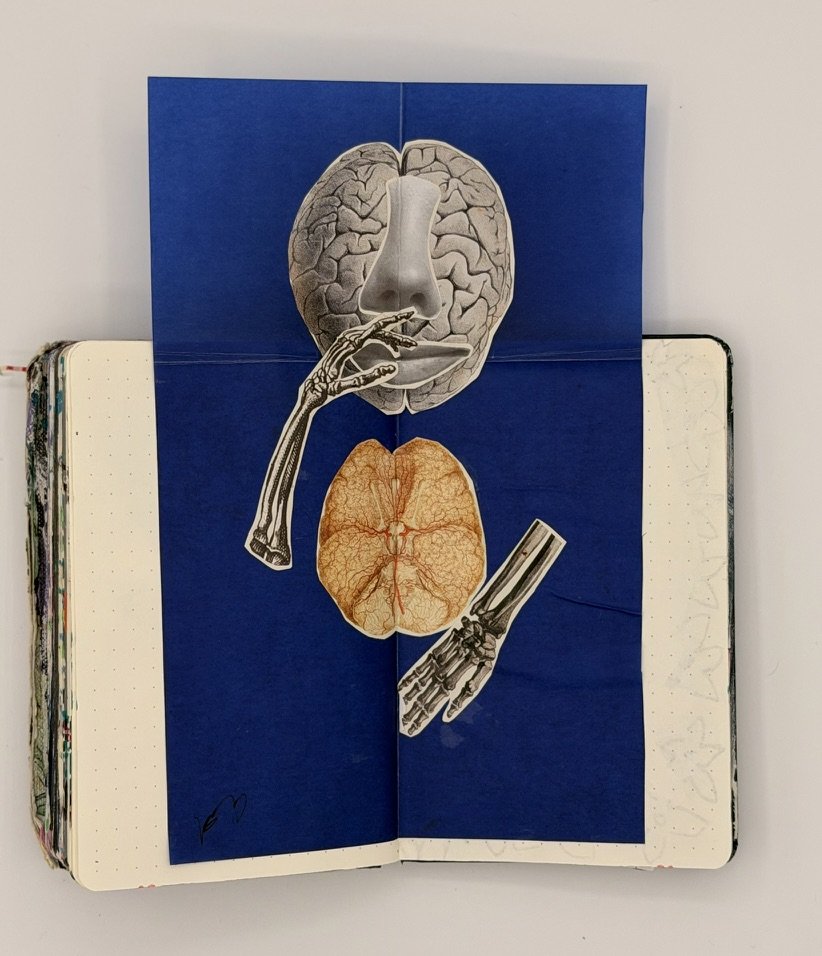
Images are cut, torn, layered, and repositioned. Parts are removed. Others are introduced. What once felt complete is taken apart so something else can form. I learn that creating and becoming requires destroying and deconstructing. The physical undoing on the page reflects and encourage the internal decolonization we must pursue and endure.
I am not trying to restore what was there before.
I am interested in what becomes possible through change.
Meaning is built through proximity.
Through what is placed next to what.
Through tension, overlap, and interruption.
The work stays open. It does not need to resolve.
Lineage: A Dada Inheritance
This practice sits within a larger lineage.
Collage carries a history of questioning fixed meaning and disrupting what is taken for granted. It allows for fragments to exist without needing to be unified into a single story.
I work within that tradition.
Rearranging what is given.
Letting contradiction remain visible.
Allowing humor, disruption, and instability to shape the work.
Not as disorder, but as a way of seeing more clearly.
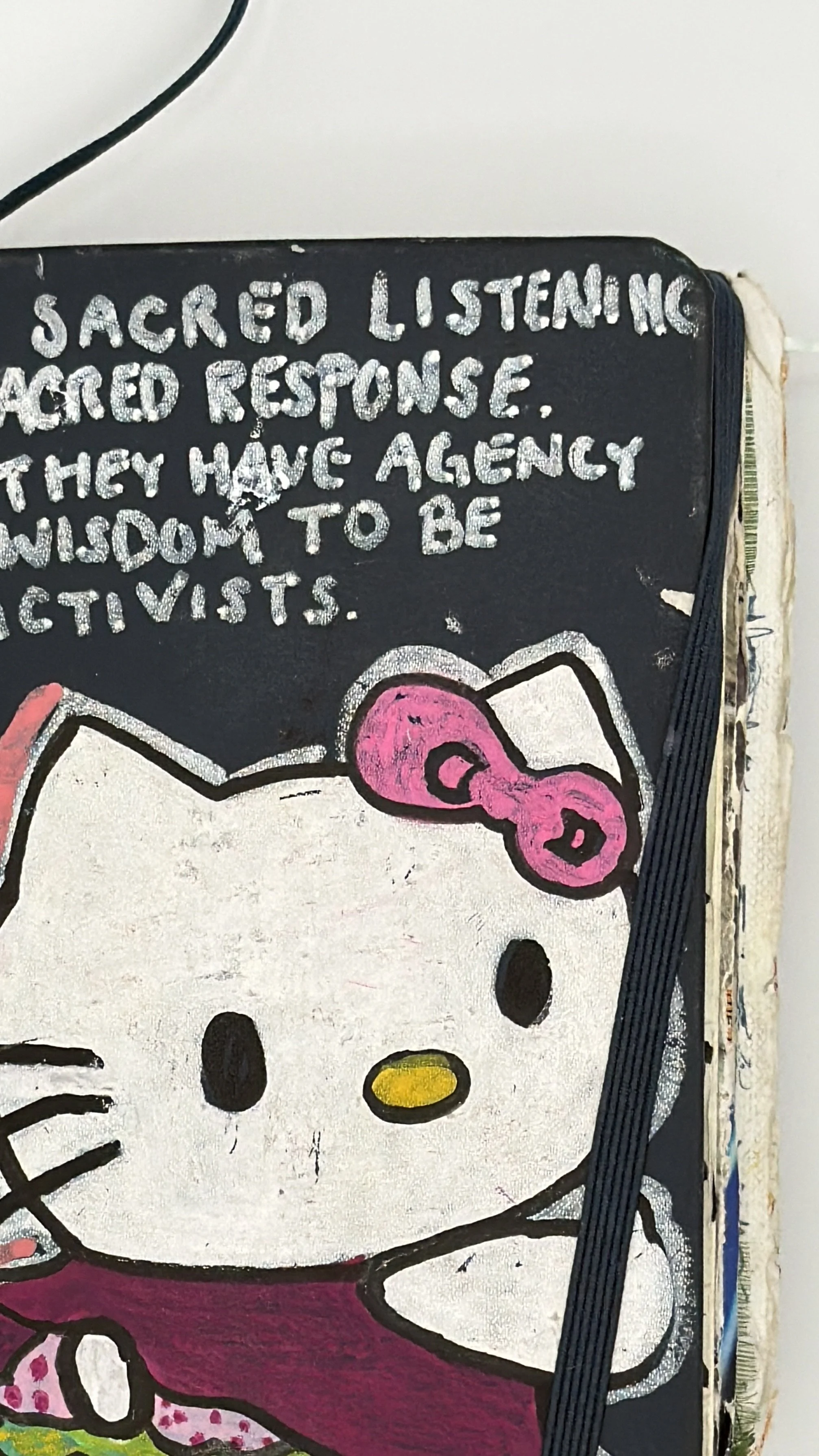
Art Journaling as Altar: A Site for Contemplation
These pages function as an altar.
Not something separate from the work, but the place where the work happens. A surface where attention is practiced through gathering, placing, and returning.
Contemplation takes place in the act itself.
In noticing what holds, what shifts, what continues to ask for space.
The page does not demand resolution.
It holds questions long enough for something to change.
Each return alters what I see.
Each arrangement offers a new way of understanding.
This is where the work is met, again and again.